
Organization for Your Stamps & Dies
The Stamp & Die Library System
A quiet, practical way to organize your craft collection—so you spend less time searching, and more time making.
If you've ever thought, I know I have that stamp set somewhere—this is for you.
One of the biggest frustrations in a craft room isn't having too much. It's not being able to find what you need when inspiration strikes. Stamps and dies end up tucked into piles, stacked in drawers, or stored in a way that made sense on Tuesday but feels like a mystery by Saturday.
That's where The Stamp & Die Library System comes in—a method inspired by the way a real library actually works.
A library doesn't just hold books. It gives every book a place. It groups similar items together. It uses a catalog to tell you exactly where something belongs. That same thinking works beautifully for paper crafting supplies. With the right setup, your stamps and dies become organized, labeled, and easy to retrieve—so you can skip the digging and get back to creating.
Why a library works so well
Think about what makes a library effective. Books aren't shoved into random bins. They're grouped into categories, stored upright for easy browsing, labeled so they're simple to find, and returned to a designated place after use. A catalog tells you where to look before you ever start searching the shelves.
A good stamp and die system should do the same thing. When your supplies are visible and sorted by category, something quietly shifts:
- ✓ You can actually see what you already own
- ✓ You stop accidentally buying duplicates
- ✓ Coordinating products come together faster
- ✓ Cleaning up takes minutes, not the afternoon
- ✓ You feel inspired instead of overwhelmed
Your collection becomes something you use, not just something you store.
Turn each set into its own "book"
In a library, each book has its own cover and its own place on the shelf. In your craft room, each stamp and die set needs its own contained home too.
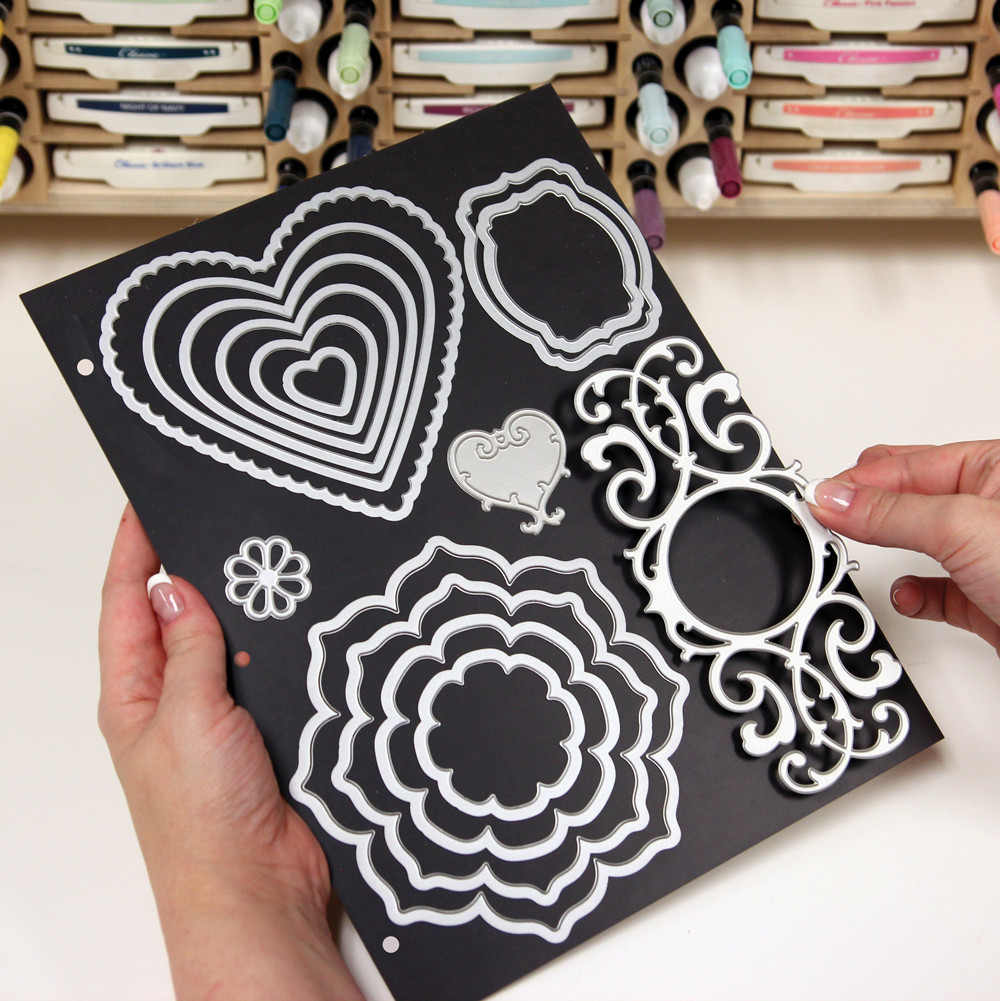
Keep dies secure, visible, and easy to handle.
|
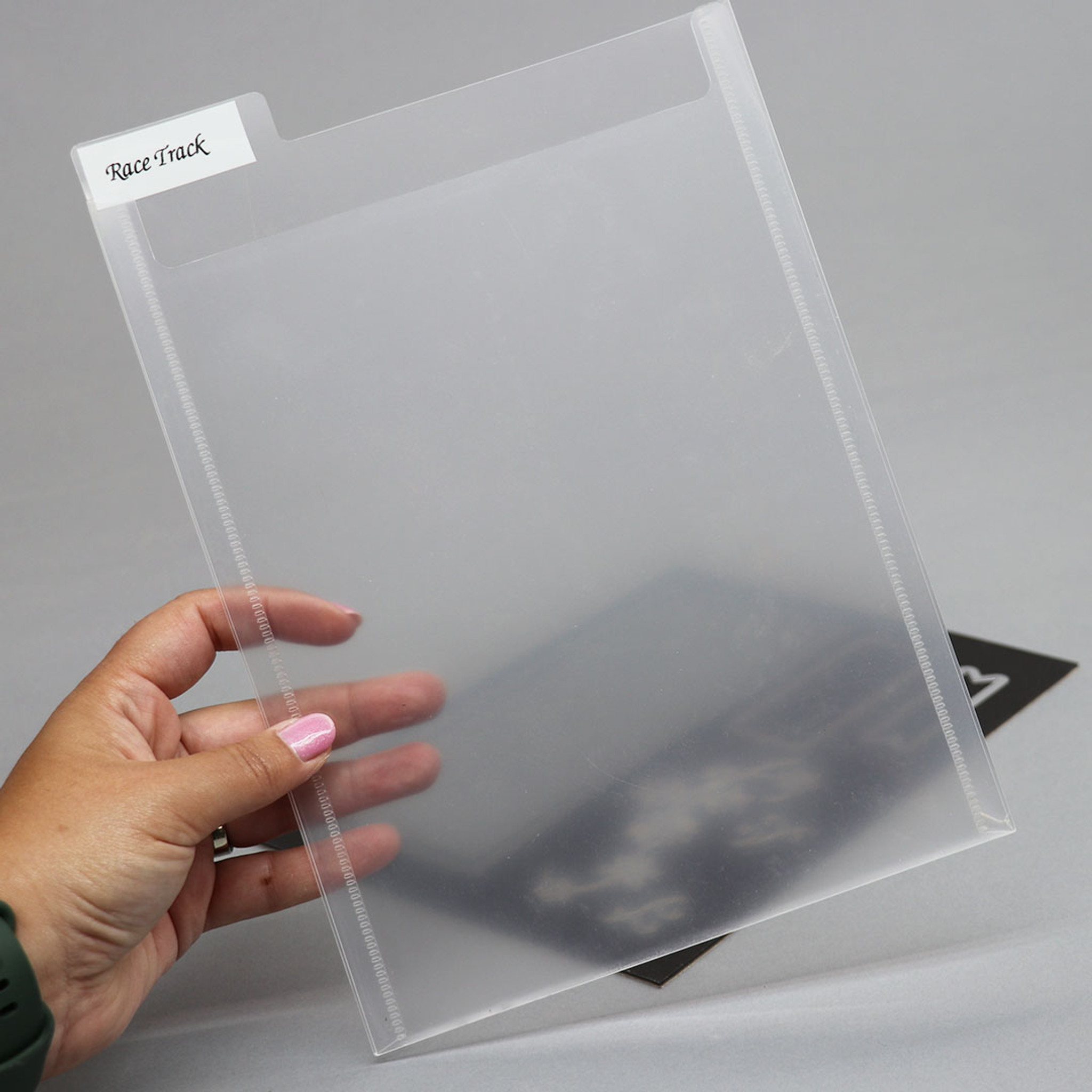
Keep stamps and dies together in one clean place.
|

Extra room for coordinating sets or bulkier collections.
|
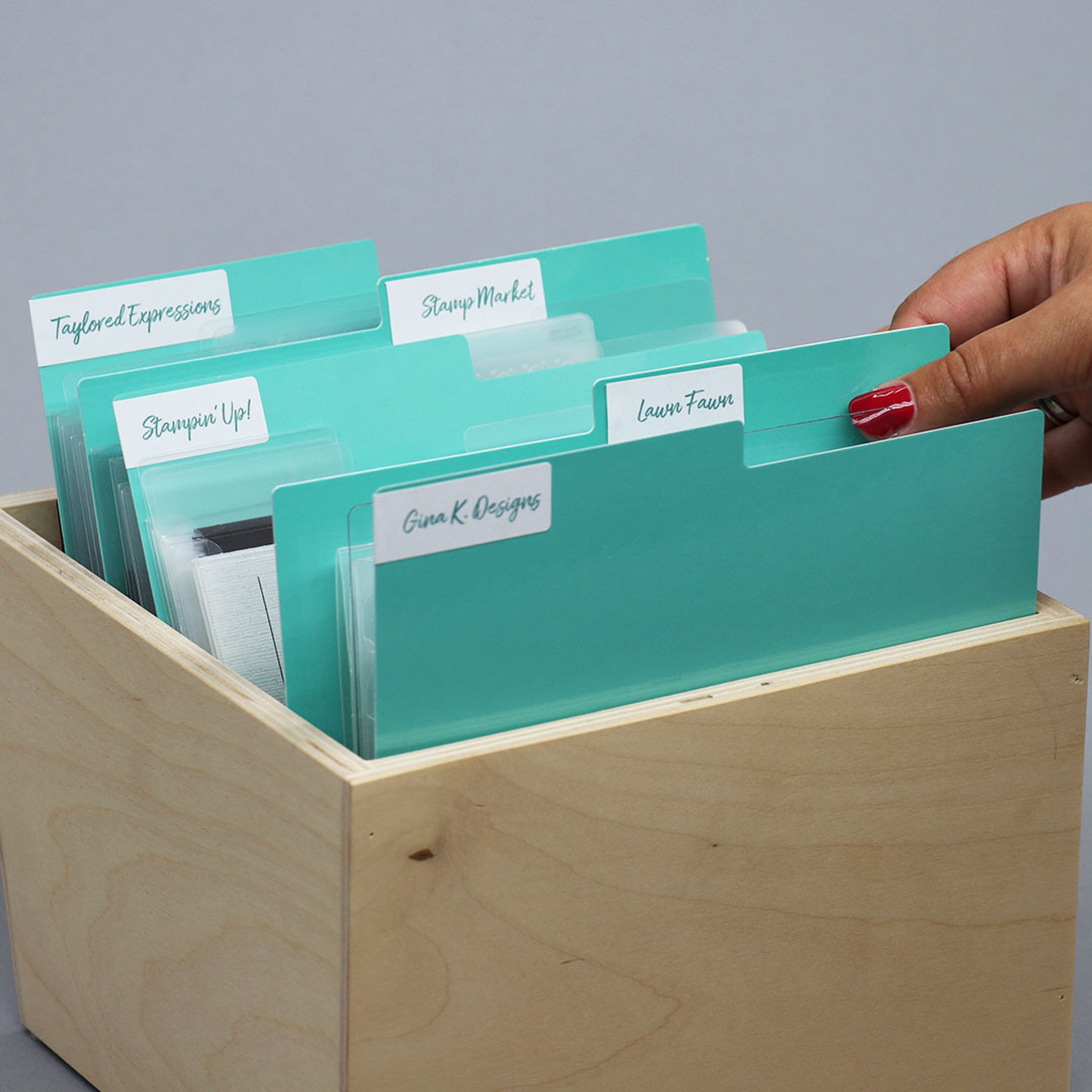
Break your collection into clear, searchable sections.
|
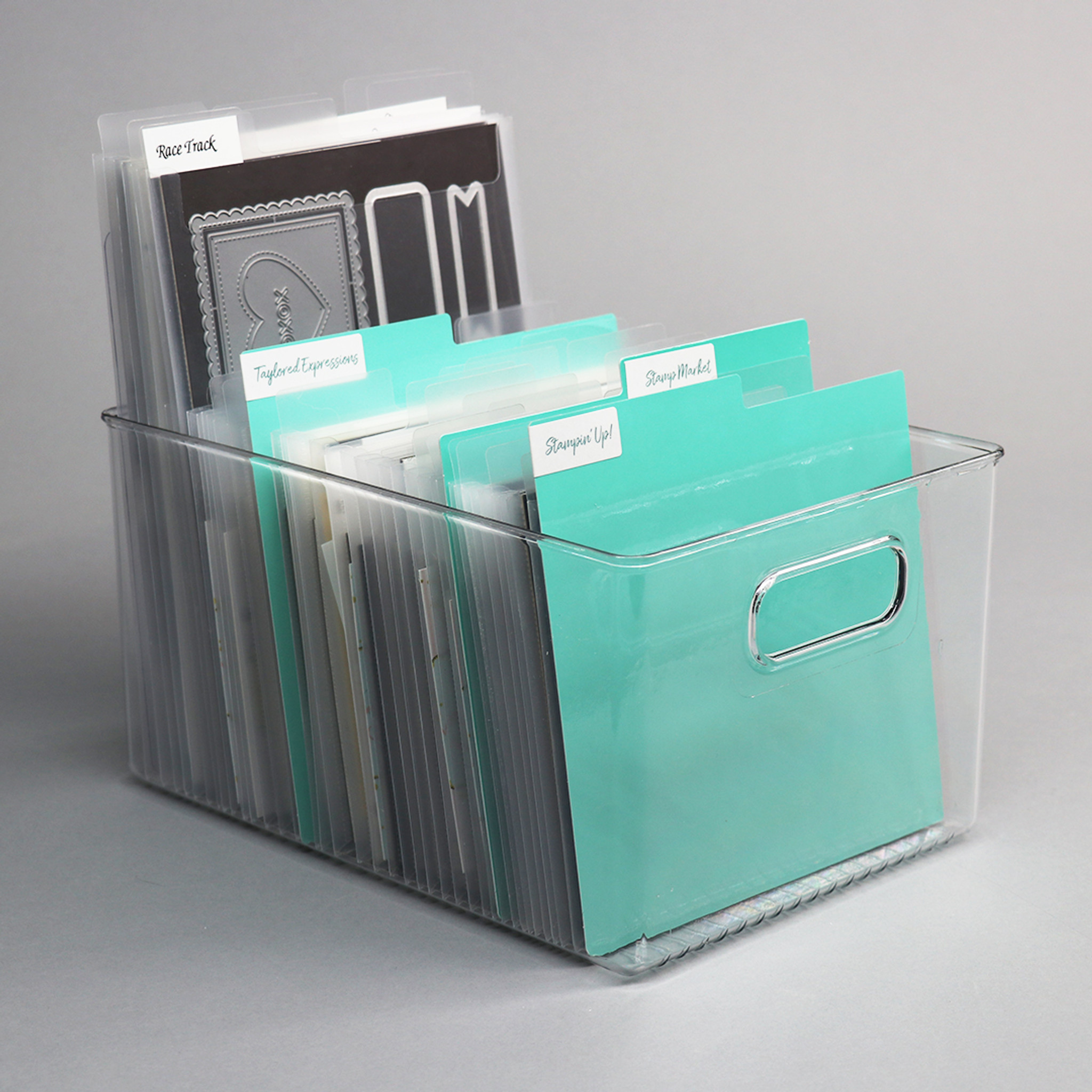
The upright shelf that makes browsing effortless.
|

A warm wooden shelf for larger sets and slimline dies.
|
Together, these create a simple "unit" for each set—almost like turning each stamp and die collection into its own book. Organize however your brain works best:
The goal is simple: each set should be easy to identify, easy to pull out, and easy to put back.
Store them upright so you can browse
Once each set has its own home, the next step is filing them in a way that makes them browseable. This is where the Acrylic Crate becomes the hero of the system.
Instead of stacking stamp sets flat or hiding them in drawers, the Acrylic Crate lets you store them upright—so you can flip through your collection the way you'd browse books on a library shelf.
- ✓ Scan your whole collection in seconds
- ✓ Stop forgetting what you already have
- ✓ Pull one set without disturbing the rest
- ✓ Putting things away feels simpler, not dreaded
Use dividers to create sections
A real library has sections. Fiction is separated from biography. History sits apart from cookbooks. The shelves are organized so you always know where to begin looking.
Your stamp and die system should work the same way. Crate Dividers break your collection into categories so you can narrow down where to search—instead of flipping through everything you own, you go straight to the right section first.
Dividers are what transform storage into a true system. They create structure, make browsing easier, and help the whole collection feel manageable again.
Build your own card catalog
One of the most powerful parts of an old-school library wasn't just the shelves—it was the card catalog. Before you went hunting for a book, you searched the catalog. It told you what the library had and where that book lived. It gave you a clear path from search to shelf.
That same idea can work beautifully in your craft room.
As your collection grows, create a simple personal archive—a craft room card catalog you can "look up" before heading to the shelf. A few approaches that work well:
- ✓ A Google Sheet — Searchable, sortable, and free. List each set and where it lives.
- ✓ A binder system — Print photos or reference sheets and organize them by theme or season.
- ✓ A cataloging app — Apps like Color My Life let you browse your collection from your phone.
This step is especially helpful when you find yourself asking: Where did I file that floral set? Do I already have this sentiment? Which crate holds my nesting dies? Keep in mind digital cloud based options allow you to check sets when you aren't in your craft space. No more guessing. Just search, then go straight to the right spot. That's what makes it a real library. ✨
Make it easy to return things home
Libraries work because every book has a home to return to. The same is true in your craft room. Clutter builds up because cleanup feels complicated—if stamps and dies don't have a designated spot, they end up in "I'll put this away later" piles.
But when each set has a place—inside a Storage Pocket, behind a divider, in an Acrylic Crate—putting it away becomes effortless:
No guesswork. No reshuffling. No digging through random stacks next time. Just a craft room that's always ready when you are.
A system that grows with you
You don't have to organize everything at once. Start with one crate, a handful of categories, and a simple filing method. As your collection grows, add more pieces and expand the system naturally. Begin with Magnet Cards, Storage Pockets, one Acrylic Crate, and a few Crate Dividers—then build from there.
Because the system is flexible, it grows with you over time without forcing you to start over.
Why it actually matters
Organizing your stamps and dies isn't just about neatness. It's about removing friction from the creative process. When you can find what you need, see what you own, and put things away easily, crafting becomes more enjoyable. You spend less time searching and more time making.
This isn't about perfection. It's about creating a system that supports your creativity—one that's practical, flexible, and easy to maintain.
Build your own library.
Acrylic Crates, Magnet Cards, Storage Pockets, Storage Pockets Plus, and Crate Dividers—everything you need to turn piles into a system.
Shop the System →